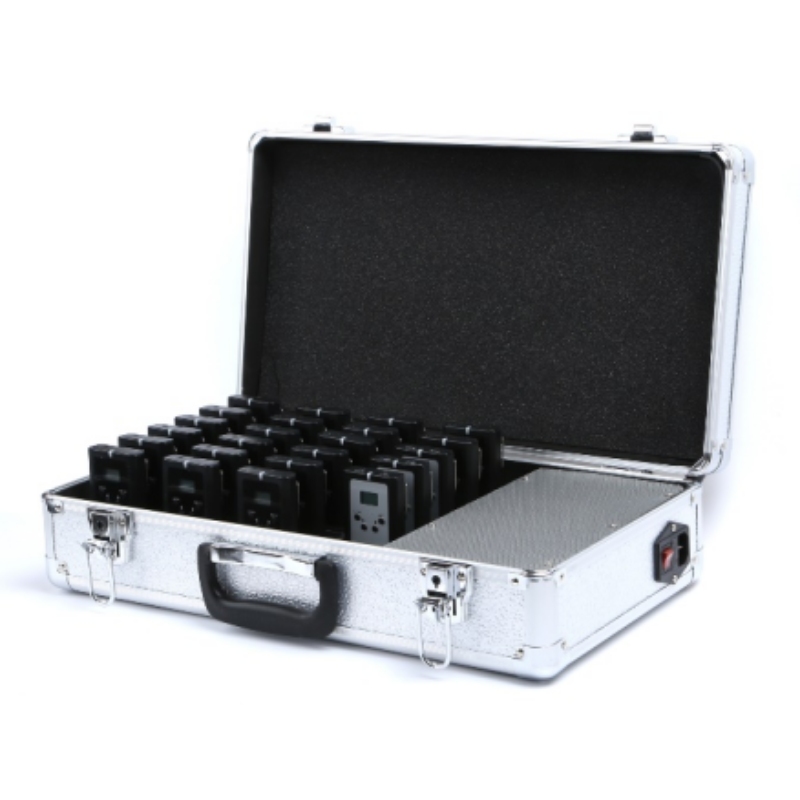
How to Choose a Tour Guide Audio System for Different Group Sizes
Release time: 2026-08-22
Table of Contents
Guiding a small private group is very different from managing a large tour with dozens of visitors. The number of people, tour distance, communication method, and operating environment can all affect which equipment is the most practical.
With experience in developing and manufacturing wireless tour guide equipment, Mix Tech provides different system configurations for group tours, including transmitters, receivers, microphones, and listening devices. This variety gives buyers more flexibility, but it also means that choosing the right model requires more than simply comparing product prices or technical specifications.
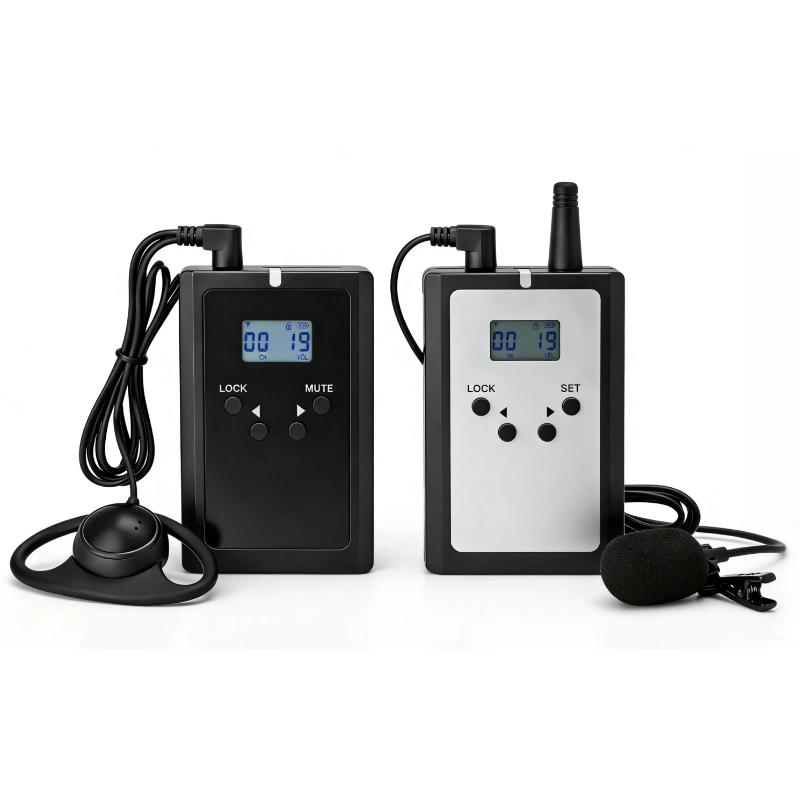

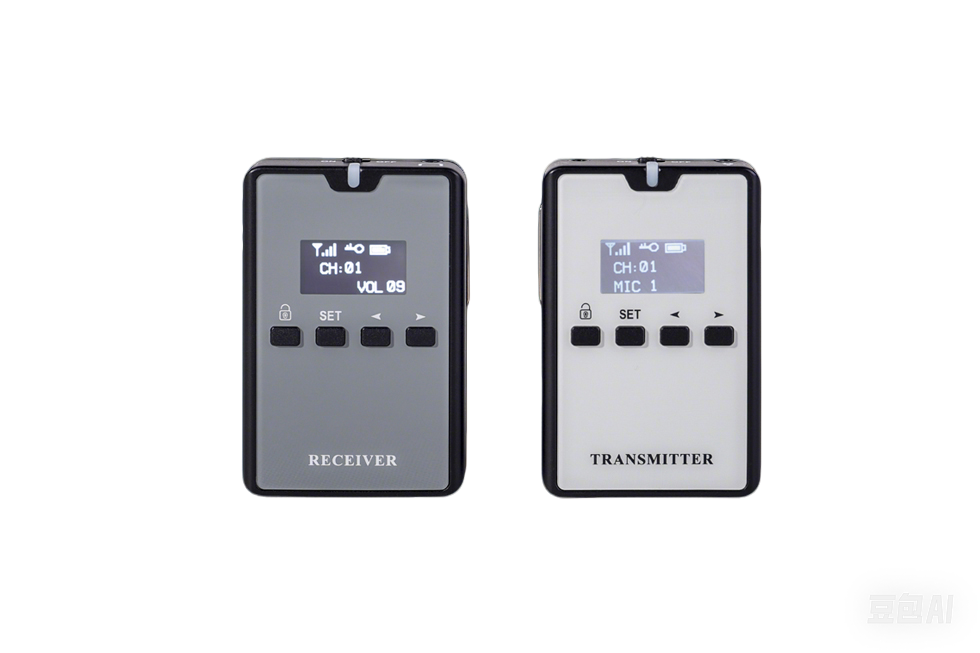
A suitable Tour Guide Audio System should match the size of the group as well as the way the tour is conducted. A compact system may be sufficient for a small private tour, while a larger group may require more receivers, multiple channels, longer transmission distance, or extended battery life.
The following factors can help buyers select a more suitable system for different group sizes and tour conditions.
1. Start With the Number of Participants
Group size is one of the easiest ways to narrow down the available options.
For a small group, a simple transmitter and a limited number of receivers may be enough. In this situation, portability and ease of operation can be more important than having a large number of channels or advanced functions.
As the number of participants increases, however, equipment management becomes more complicated. The system may need to support more receivers, maintain stable communication across the entire group, and provide enough battery capacity for longer tours.
Before purchasing, buyers should therefore estimate not only the normal number of participants but also the largest group they expect to handle. Leaving some additional capacity can make it easier to accommodate seasonal demand or larger tour bookings.
2. Choosing Equipment for Small Groups
Small private tours, museum groups, school visits, and corporate visits often involve relatively few participants.
For these applications, a lightweight system can make the tour easier to manage. Visitors do not need to carry bulky equipment, while the guide can communicate without raising their voice.
The WAT01-NG2 is one example of a compact wireless tour guide system. Its receiver weighs approximately 45 grams and supports 50–100 selectable channels. The system can also accommodate multiple receivers, making it suitable for group communication where portability and flexible channel selection are important.
For a small group, buyers should focus on:
- Lightweight transmitters and receivers
- Simple channel selection
- Comfortable listening devices
- Sufficient battery life for the planned tour
- Easy distribution and collection of equipment
There is little benefit in choosing a much larger system if the group rarely exceeds a small number of visitors.
3. Medium-Sized Groups Need More Flexibility
When a tour includes a larger number of visitors, equipment management becomes more important.
A medium-sized group may require more receivers and a stronger ability to maintain communication across the entire tour route. If visitors become separated from the guide, even briefly, they may miss important information.
The WAT01-NG4 is designed for wireless group communication and offers a transmission distance of approximately 200–300 meters, depending on the operating environment. It also provides 50–100 channels and supports communication between the transmitter and multiple receivers.
For this type of group, a Tour Guide Microphone System should provide enough channel flexibility to reduce interference and allow the equipment to be used in environments where several groups may operate at the same time.
Buyers should also consider how quickly staff can distribute and collect receivers. When dozens of visitors are involved, small differences in equipment management can have a noticeable effect on the efficiency of the tour.
4. Large Groups Require More Attention to Coverage and Capacity
Large groups create different challenges.
The guide may need to communicate with many visitors at the same time, while the group itself may spread across a relatively large area. In this situation, transmission range becomes increasingly important.
A system such as WAT03 is designed for longer-range group communication, with a stated transmission distance of approximately 200–250 meters. Its receiver battery life can reach around 60–70 hours, depending on the configuration.
For large groups or tours lasting several hours, buyers should pay particular attention to:
- Transmission distance
- Number of available receivers
- Battery life
- Channel availability
- Signal stability
- Charging and storage arrangements
A system with sufficient range can help the guide maintain communication even when the group does not remain tightly together.
5. Consider the Tour Environment, Not Just Group Size
Two groups with the same number of visitors may still require different equipment.
A small indoor museum tour may take place within a relatively limited area, while a small outdoor tour could cover several hundred meters. Similarly, a factory tour may involve machinery noise, while a cultural site may have a much quieter environment.
This is why group size should be considered together with the tour environment.
For indoor tours, buyers may place more emphasis on compact design, comfortable headsets, and simple operation. For outdoor or extended tours, transmission range, battery life, and signal stability may become more important.
A Tour Guide Radio System can be particularly useful when visitors need to remain connected with the guide over a wider area without relying on the guide’s voice carrying through the environment.
6. Choose the Right Listening Method
The receiver is only one part of the visitor experience. Buyers should also consider how visitors will actually hear the guide.
Headsets or earphones can provide a more personal listening experience and help visitors hear the guide clearly without requiring the guide to speak loudly. This can be useful in museums, factories, exhibitions, and other environments where keeping noise levels under control is important.
Different products may support different listening configurations, so buyers should consider:
- Whether visitors prefer one-ear or two-ear listening
- Whether the equipment needs to be worn for several hours
- Whether visitors need to hear surrounding sounds
- Whether the system will be shared between different users
- How easy the headset is to clean and replace
For frequent group tours, comfortable Tour Guide Headsets can be just as important as the wireless transmission equipment itself.
7. Battery Life Becomes More Important as Tour Time Increases
Group size is not the only factor affecting equipment selection. Tour duration also matters.
A short museum tour may only require a few hours of operation, while a full-day factory visit, outdoor excursion, or multi-site tour can place greater demands on the batteries.
Longer battery life can reduce the need for staff to recharge equipment between groups. It can also be useful when the same equipment is used repeatedly throughout the day.
For example, WAT03 is listed with approximately 60–70 hours of receiver battery life, making battery performance one of its notable characteristics.
When comparing models, buyers should consider the expected daily operating schedule rather than simply choosing the product with the largest battery specification.
8. Think About Channel Requirements for Multiple Groups
Channel capacity can become important when several tour groups operate in the same location.
If different guides are working nearby, the systems need to operate without creating unnecessary interference between groups. Having more selectable channels can give operators greater flexibility when assigning equipment.
The WAT01-NG2 and WAT01-NG4 both offer 50–100 channels, depending on the configuration. This can be useful for venues that regularly operate several guided groups.
For larger attractions, museums, exhibition centers, and visitor facilities, buyers should consider how many groups may operate simultaneously rather than looking only at the size of a single group.
9. Compare Models According to the Actual Requirement
There is no single wireless tour guide system that is automatically the best choice for every group.
The following comparison can provide a practical starting point:
| Model | Transmission Distance | Channel / Capacity Features | Battery Performance | Suitable For |
| WAT01-NG2 | Varies by configuration | 50–100 channels; supports multiple receivers | Suitable for regular group tours | Small to medium groups, museums, corporate visits |
| WAT01-NG4 | Approx. 200–300 m | 50–100 channels | Designed for extended use | Medium to large groups and wider tour areas |
| WAT03 | Approx. 200–250 m | Designed for wireless group communication | Receiver battery life approx. 60–70 hours | Large groups, long tours, outdoor applications |
| WAT05-A | Model-dependent | Wireless transmitter/receiver configuration | Model-dependent | General guided tours and visitor communication |
| WAT07 | Model-dependent | Compact wireless tour guide configuration | Model-dependent | Portable group tours and visitor guidance |
The figures above should be used as a reference rather than as the only basis for purchasing. Actual performance can depend on the selected configuration and operating environment, so buyers should confirm the final specifications with the supplier before placing a larger order.
10. Consider Equipment Management for Larger Groups
As the number of visitors increases, equipment management becomes part of the purchasing decision.
For a group of ten people, distributing and collecting receivers is relatively simple. For a group of fifty or one hundred people, the same process requires more planning.
Buyers should consider whether the system allows staff to:
- Quickly distribute receivers before a tour
- Identify and organize different channels
- Collect equipment efficiently afterward
- Recharge multiple devices at the same time
- Store transmitters, receivers, and headsets together
- Replace individual units when necessary
These details may not appear as important as transmission distance on a product specification sheet, but they can have a significant effect on daily operating efficiency.
11. Leave Some Capacity for Future Growth
It is usually better to purchase equipment based on expected maximum demand rather than today’s smallest group.
A tour operator may currently handle groups of 20 people but later begin accepting larger corporate visits or school groups. A museum may experience seasonal increases in visitor numbers. Buying a system with some additional capacity can reduce the need for a complete replacement when requirements change.
At the same time, excessive capacity can increase the initial investment and leave equipment unused.
The goal should therefore be to find a reasonable balance between current requirements, expected growth, and total ownership cost.
Frequently Asked Questions
1. What is the most important factor when choosing a Tour Guide Audio System?
Group size is a useful starting point, but it should not be considered alone. Transmission range, tour duration, listening method, channel capacity, battery life, and the physical environment should also be evaluated.
2. How many receivers are needed for a tour?
The number normally depends on the maximum number of visitors who need to listen individually. Buyers should also consider whether additional receivers may be needed for future groups or unexpected increases in attendance.
3. Is a longer transmission range always better?
Not necessarily. A longer range can be useful for outdoor tours or large sites, but a smaller venue may not require it. Buyers should select a range that provides reliable coverage without paying for capacity that will rarely be used.
4. Are headsets important when choosing a wireless tour guide system?
Yes. The receiver transfers the audio signal, but the headset or earphone determines how visitors actually hear the guide. Comfort, sound clarity, wearing time, and ease of cleaning can all affect the overall visitor experience.
5. Why does channel capacity matter for group tours?
Channel capacity becomes especially useful when several tour groups operate in the same area. More selectable channels can provide greater flexibility for assigning different groups and reducing the risk of interference.
6. Should I choose a different system for indoor and outdoor tours?
In many cases, yes. Indoor tours may place greater emphasis on compact design and comfortable listening, while outdoor tours may require greater transmission range, longer battery life, and stable communication over a wider area.
Making the Right Choice for Different Group Sizes
Choosing a wireless tour guide system should start with the actual way the equipment will be used rather than with a single product specification.
Small groups may benefit from lightweight equipment and simple operation. Medium-sized groups may require greater channel flexibility and more reliable coverage, while large groups often need longer transmission distances, sufficient receiver capacity, and better battery performance.
The product range from Mix Tech includes different wireless configurations that can be considered according to group size, tour distance, operating time, and visitor requirements. Instead of selecting the most powerful system available, buyers can compare these factors and choose a configuration that provides enough capacity without unnecessary equipment.
For any Tour Guide Audio System, the goal is ultimately the same: allow the guide to communicate clearly while visitors can listen comfortably and remain connected throughout the tour. Evaluating the group size, environment, distance, battery requirements, and equipment management needs before purchase can make the final selection more practical and cost-effective.