How to Evaluate the Quality of an Audio Guide System Before Purchase
Release time: 2026-08-18
Table of Contents
Buying an audio guide system involves more than comparing prices or counting features. For museums, exhibitions, tourist attractions, cultural venues, factory visits, and other guided environments, equipment quality can directly affect both daily operation and visitor experience.
With years of experience in developing and manufacturing audio guide and tour guide equipment, Mix Tech supports customers across different markets with product development, manufacturing, and OEM/ODM capabilities. This experience also shows why buyers should look beyond a specification sheet when evaluating an Audio Guide System.
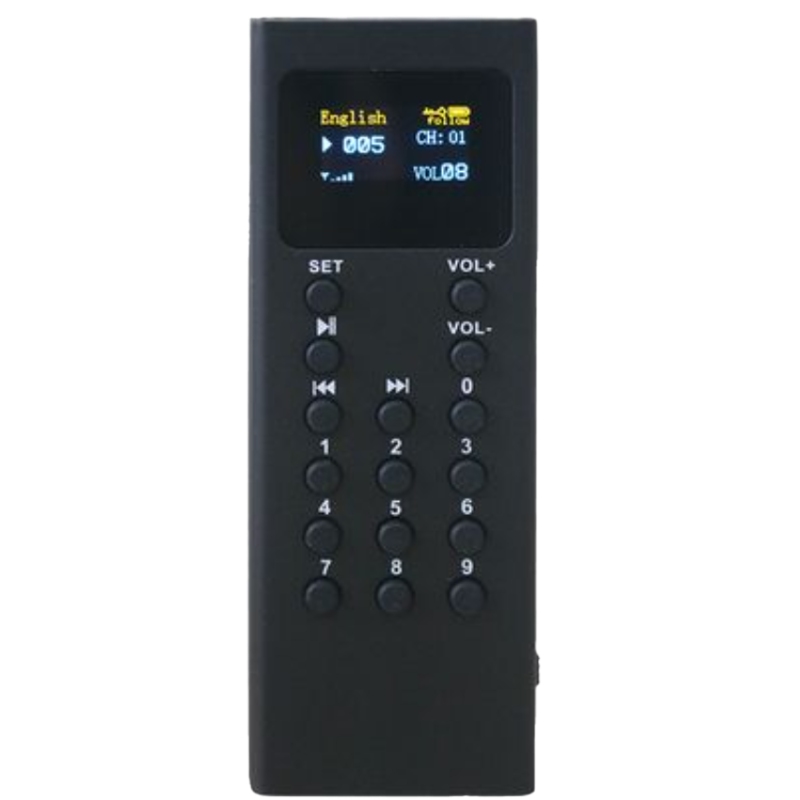
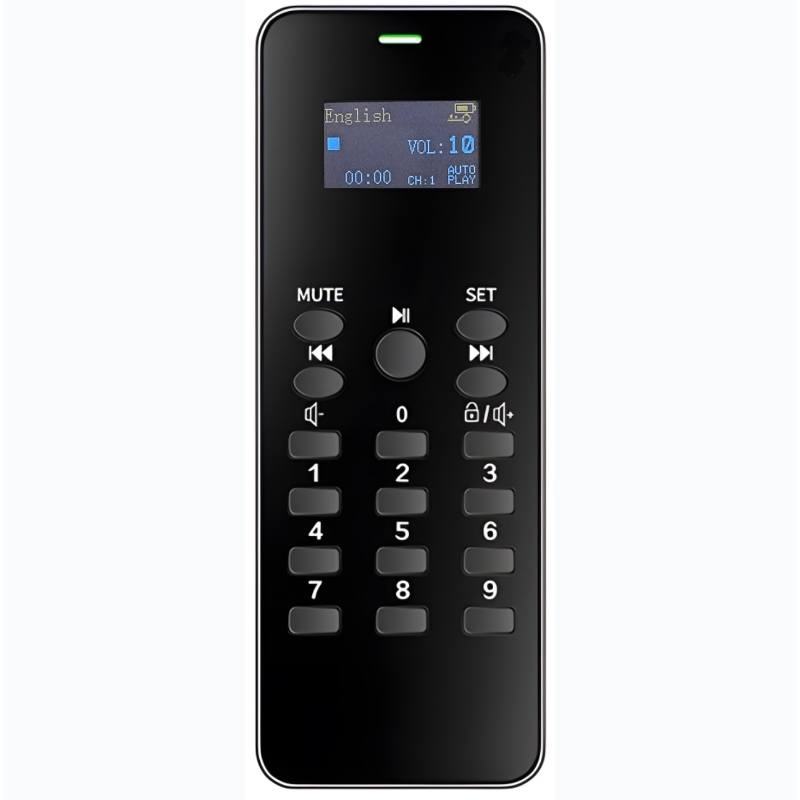
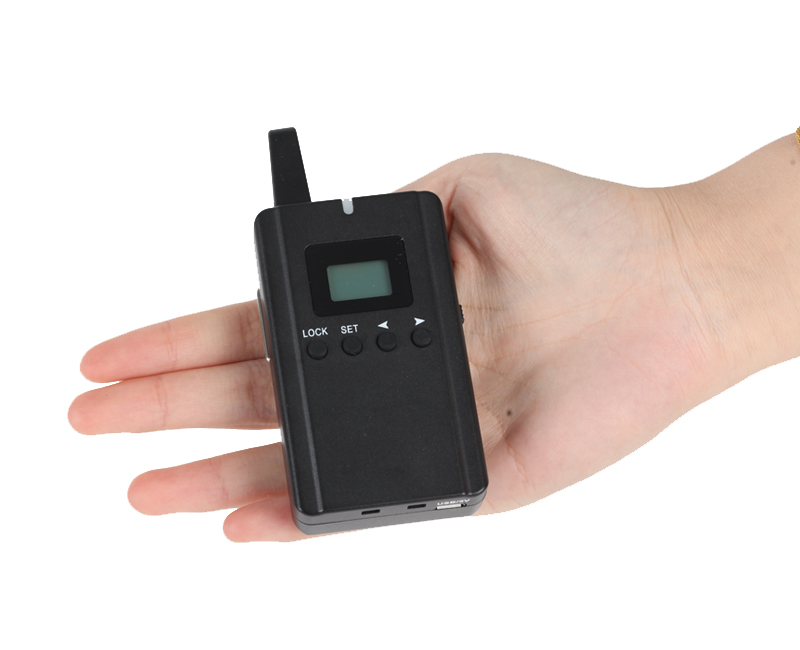
Audio clarity, stable performance, convenient operation, storage capacity, and suitability for the intended environment all deserve attention before placing an order. The following factors can help buyers make a more practical evaluation.
1. Start with Audio Quality and Listening Clarity
The most basic function of an audio guide is to make spoken information easy to hear and understand. If the narration is unclear, distorted, or difficult to adjust, even a system with many advanced functions may not provide a satisfactory visitor experience.
When evaluating an Audio Tour Guide System, buyers should consider whether the device can provide clear speech at a comfortable listening level. The listening environment also matters. A system used in a quiet indoor exhibition may have different requirements from one used in a busy attraction, production facility, or large visitor center.
It is also useful to check the audio output method. Depending on the product design, visitors may use earphones or other audio output equipment. The connection should be convenient enough for repeated daily use, while the device itself should remain simple for visitors who may only use it for a short period.
2. Check Both Manual and Automatic Playback
Playback control is one of the most practical factors to evaluate.
Manual playback allows visitors to select a specific audio section by entering a number or using a control on the device. This can be useful when visitors want to explore different exhibits according to their own interests.
Automatic triggering provides another approach. When a visitor enters a designated area, a transmitter can trigger the corresponding audio content without requiring repeated manual operation.
For buyers, neither method should automatically be considered better. The right choice depends on the tour format and how much control visitors are expected to have.
For example, the K1 system supports both number-button playback and automatic triggering through a transmitter. Audio files can also be uploaded through a USB connection, allowing content to be updated when necessary.
This combination can be useful for venues that want to offer visitors both independent selection and location-based playback.
3. Evaluate Available Models Instead of Looking at One Specification
When comparing an Audio Guide System, buyers should not judge quality from a single specification. Looking at several models within the same product range can provide a clearer idea of how different configurations address different operational requirements.
The automatic audio guide range currently presented on the website includes the Mixtech K1 Automatic Audio Guide System, MixTech New Generation Automatic Tour Guide System ATGS01, and MixTech Automatic Tour Guide System ATGS02.
Their specifications show different approaches to playback, automatic triggering, storage, battery performance, and physical design. This makes them useful references when considering which features actually matter for a particular project.
Automatic Audio Guide System Product Comparison
| Product | Playback Method | Memory | Language Support | Automatic Triggering | Key Specifications |
| Mixtech K1 Automatic Audio Guide System | Number-button + automatic triggering | 16G | Up to 90 languages | Yes | 0.5–100 m transmitter range, up to 999 files or 256 files in automatic mode, 30-hour playing time, 62 g |
| MixTech New Generation Automatic Tour Guide System ATGS01 | Number-button + automatic triggering | 16G | Up to 90 languages | Yes | 0.5–100 m transmitter range, up to 999 sections in number-input mode or 256 in automatic mode, 30-hour battery time, 68 g |
| MixTech Automatic Tour Guide System ATGS02 | Manual + automatic triggering | 16G | Up to 90 languages | Yes | 759–928 MHz wave band, 15 dBm output power, -95 dBm sensitivity, 83 × 58 × 18 mm |
The automatic audio guide category lists ATGS02 with up to 90 languages and up to 999 sections. Buyers should confirm the final configuration and specifications with the supplier before ordering.
This comparison demonstrates why product evaluation should be based on the complete configuration rather than one attractive specification. A compact design may be more important for some users, while others may place greater emphasis on battery life, automatic triggering, storage, or content capacity.
4. Check Signal Range and Stability
Working distance is another important factor, particularly when audio content needs to be triggered across different areas.
The actual requirements will depend on the venue layout. Buyers should consider the distance between the transmitter and receiving device, walls or other obstacles, the number of trigger locations, and whether visitors will move continuously between different areas.
The K1 and ATGS01 specifications list a transmitter working range of 0.5–100 meters. The manufacturer also states that its broader audio guide product range can provide working distances from 1 to 500 meters and anti-interference capabilities, depending on the system.
For this reason, range should not be evaluated only from a product specification sheet. If the equipment will be installed in a complex environment, testing it at representative locations can provide a more accurate indication of whether the signal performance meets project requirements.
5. Look at Storage Capacity and Content Management
An audio guide can contain a large amount of recorded material, particularly when a venue provides several languages.
A product with adequate storage capacity can reduce the need for frequent file management. Buyers should therefore check how many audio sections can be stored, how different language files are organized, and how easily new content can be uploaded.
The K1 and ATGS01 both provide 16G storage. K1 supports up to 999 files or 256 files when using automatic triggering, while ATGS01 provides up to 999 sections in number-input mode or 256 sections in automatic triggering mode.
These capabilities are particularly relevant to venues that regularly update exhibition information, add new tour content, or provide multilingual narration.
6. Consider Battery Performance for Real Daily Use
Battery life is another factor that should be evaluated according to the actual operating schedule.
A visitor venue may distribute dozens or hundreds of devices during a busy day. If the equipment needs to be recharged frequently, staff members may spend additional time collecting, charging, checking, and redistributing devices.
The K1 and ATGS01 list approximately 30 hours of playing time and use rechargeable lithium batteries. A multi-unit charging case is also available for these systems.
However, buyers should not simply select the model with the highest advertised battery figure. It is more useful to compare the expected operating time with the venue’s actual daily schedule.
For example, a facility that operates for eight hours per day may have very different charging requirements from a site where equipment is used continuously by several visitor groups.
7. Pay Attention to Size, Weight, and Physical Durability
An audio guide is often handled repeatedly throughout its service life. Visitors may carry the device for several hours, pass it between different users, or use it frequently in high-traffic environments.
This makes physical design an important part of quality evaluation.
The K1 measures 117 mm × 43 mm × 14.5 mm and weighs approximately 62 grams. ATGS01 measures 115 mm × 43 mm × 15 mm and weighs approximately 68 grams.
For buyers, these figures should be considered together with practical handling. A device that is compact and lightweight can be easier for visitors to carry, while a durable exterior can help reduce concerns associated with frequent handling.
8. Check Language Support for Different Visitor Groups
Multilingual capability can be particularly important for venues receiving international visitors.
However, language support should not be evaluated only by the number of languages listed in the specifications. Buyers should also consider how language files are uploaded, how visitors select languages, and whether staff can manage multilingual content without complicated procedures.
The automatic audio guide product category lists support for up to 90 languages for its featured models.
For an international visitor environment, this can allow one equipment platform to serve multiple language groups rather than requiring separate devices for each market.
9. Match the Playback Method to the Visitor Flow
A high-quality Tour Audio Guide System should fit the way people move through the venue.
If visitors are expected to follow a fixed route, automatic triggering can reduce the need for manual interaction. If visitors can freely choose which exhibits or information points to explore, manual playback may offer greater flexibility.
The K1 and ATGS01 provide both number-button playback and automatic triggering. ATGS02 also supports manual and automatic operation, providing another option for projects where location-based playback is required.
This is an important distinction when comparing products. A device with fewer unnecessary functions but a playback method that matches the visitor flow can be more useful than a technically complex system that does not fit the actual tour process.
10. Examine the Supplier’s Manufacturing and Development Capability
Hardware specifications are only one part of a purchasing decision. For larger projects, the supplier’s development and manufacturing capabilities can also influence the long-term value of the equipment.
Some buyers may require customized software, different product configurations, private labeling, or other project-specific changes. In these situations, working with a manufacturer that can provide technical development and production support can simplify the procurement process.
Mix Tech states that it has an R&D team experienced in software and hardware development and provides OEM/ODM services for audio guide and tour guide products. The company also reports that its equipment has been experienced by more than 10 million people at over 300 sites worldwide, with customers in more than 60 countries.
Its development history also includes the release of a first-generation audio guide system in 2009 and the development of a first-generation automatic audio guide system in 2014.
For procurement teams, this background can be useful when evaluating whether a supplier is equipped to support both standard product orders and customized projects.
11. Compare the Complete Value, Not Just the Unit Price
Price is an important part of procurement, but the lowest initial quotation does not necessarily mean the lowest overall cost.
A more useful comparison should include product performance, ease of operation, battery management, content capacity, durability, customization requirements, and supplier support.
| Evaluation Factor | What Buyers Should Check |
| Audio performance | Clear and comfortable spoken audio |
| Playback method | Manual, automatic, or both |
| Signal range | Suitable for the actual venue |
| Storage | Sufficient capacity for audio content |
| Language support | Suitable for the target visitor groups |
| Battery | Able to cover normal daily operation |
| Size and weight | Comfortable for visitors to carry |
| Durability | Suitable for repeated handling |
| Content management | Easy uploading and updating of files |
| Customization | Ability to meet project-specific requirements |
| Supplier capability | R&D, manufacturing, OEM/ODM, and technical support |
This method gives buyers a broader basis for comparing an Audio Guide System instead of making a decision from one specification or the purchase price alone.
What Should Buyers Test Before Placing an Order?
After reviewing product specifications, practical testing can provide another layer of information.
Before purchasing a larger quantity, buyers can consider checking the following:
Audio clarity:
Can visitors understand speech clearly at different volume levels?
Triggering accuracy:
Does automatic playback start reliably at the intended location?
Signal performance:
Does the system maintain stable operation throughout the required area?
Battery performance:
Can the device cover the expected working period without frequent charging?
User operation:
Can first-time users understand the controls without extensive instruction?
Content management:
Can staff upload, replace, and organize audio files efficiently?
Physical handling:
Is the device comfortable to hold and practical for repeated visitor use?
Testing these points in an actual or representative environment can reveal practical differences that may not be obvious from a specification sheet.
Frequently Asked Questions
1. What should I check first when evaluating an Audio Guide System?
Start with the factors that directly affect visitor experience and daily operation, including audio clarity, signal stability, playback method, battery life, storage capacity, and ease of use. The importance of each factor depends on the venue and how the equipment will be used.
2. Is automatic playback better than manual playback?
Not necessarily. Automatic playback can be more convenient for fixed routes because audio can start when visitors reach a designated area. Manual playback may be more suitable when visitors are free to choose different exhibits or information points. Systems supporting both methods provide greater flexibility.
3. How important is the working range of an audio guide system?
Working range is important when the system needs to cover a large or complex venue. However, the stated range should be considered together with the actual environment, including walls, obstacles, transmitter locations, and the layout of the visitor route.
4. How many languages should an audio guide system support?
There is no universal number. The required language capacity depends on the target visitor groups. For venues receiving international visitors, a system supporting multiple languages can simplify equipment management and provide a more consistent visitor experience.
5. Should buyers test an Audio Guide System before placing a large order?
Yes. Testing can help buyers evaluate audio clarity, automatic triggering, signal stability, battery performance, ease of operation, and content management under real or representative conditions. This can reveal practical differences that may not be obvious from product specifications alone.
6. Why should buyers consider the manufacturer when comparing audio guide equipment?
A manufacturer with R&D and production capabilities may be better positioned to provide customization, OEM/ODM services, technical support, and consistent product supply. These factors can become particularly important for larger or project-specific orders.
Making a More Informed Audio Guide System Purchase
oviding different configurations for manual and automatic audio playback. Combined with its R&D, manufacturing, and OEM/ODM capabilities, the product range can support projects that require standard equipment as well as customized configurations.
Ultimately, the best Tour Audio Guide System is not simply the one with the longest specification list. It is the system that can provide reliable audio, practical operation, appropriate coverage, and manageable content throughout its service life. By evaluating these factors before purchase, buyers can make a more confident decision and select equipment that matches both visitor expectations and long-term operational needs.