The Ultimate Guide to Bus Tour Guide Systems: Revolutionizing Sightseeing and Coach Tours
Release time: 2026-07-03
The sightseeing bus industry is fiercely competitive. Whether you operate an open-top Hop-On Hop-Off fleet in a bustling metropolis, a luxury long-distance coach crossing European borders, or a specialized VIP shuttle for local winery tours, passenger satisfaction hinges on one critical element: communication.
For decades, bus operators relied on standard onboard Public Address (PA) systems. Today, however, modern tourists demand a more personalized, accessible, and multi-lingual experience. If the guide’s voice is drowned out by highway noise, or if half the bus cannot understand the language being spoken, the value of the tour plummets.
This is why leading fleet managers and travel agencies are upgrading their vehicles with dedicated Wireless Bus Tour Guide Systems. In this comprehensive guide, we will explore the limitations of traditional bus audio, the technical advantages of digital Radio Frequency systems, and how the right audio equipment can dramatically increase your fleet’s profitability.
The Limitations of Traditional Bus PA Systems
Before investing in new equipment, it is important to understand why standard overhead speakers are failing modern tour operators.
- Uneven Audio Distribution: Acoustic physics on a bus are notoriously poor. Passengers sitting directly under a speaker are deafened, while those in the back row hear nothing but muffled echoes and engine rumble.
- The Monolingual Trap: A PA system only allows for one language to be broadcast at a time. In a globalized tourism market, running separate English, Spanish, and Mandarin buses is highly inefficient and leads to empty seats.
- Driver and Passenger Fatigue: Listening to a booming loudspeaker for a three-hour cross-country transit causes sensory fatigue, preventing passengers from relaxing or sleeping during long stretches between landmarks.
What is a Wireless Bus Tour Guide System?
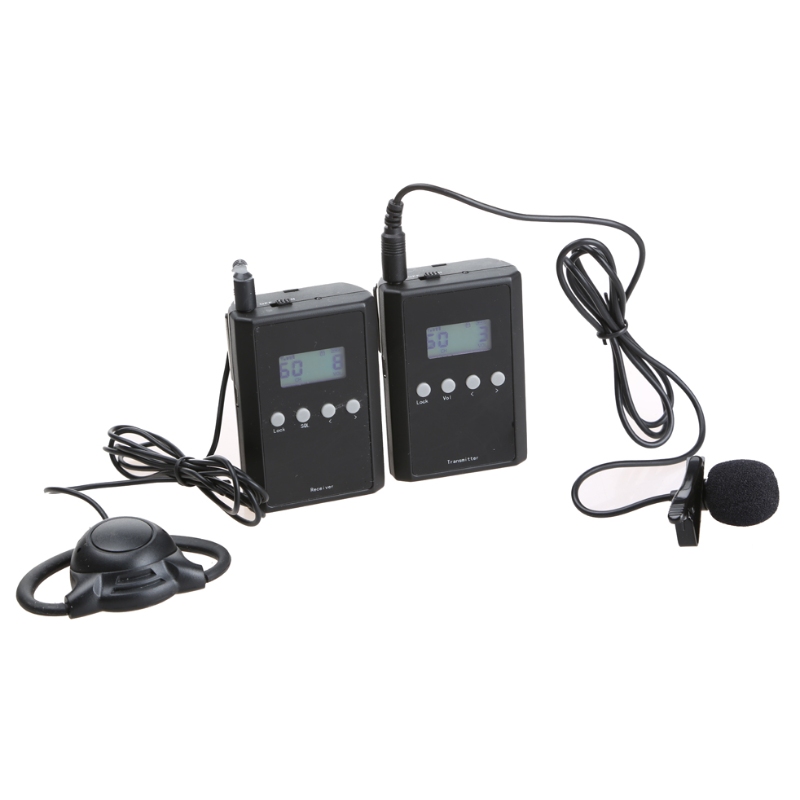
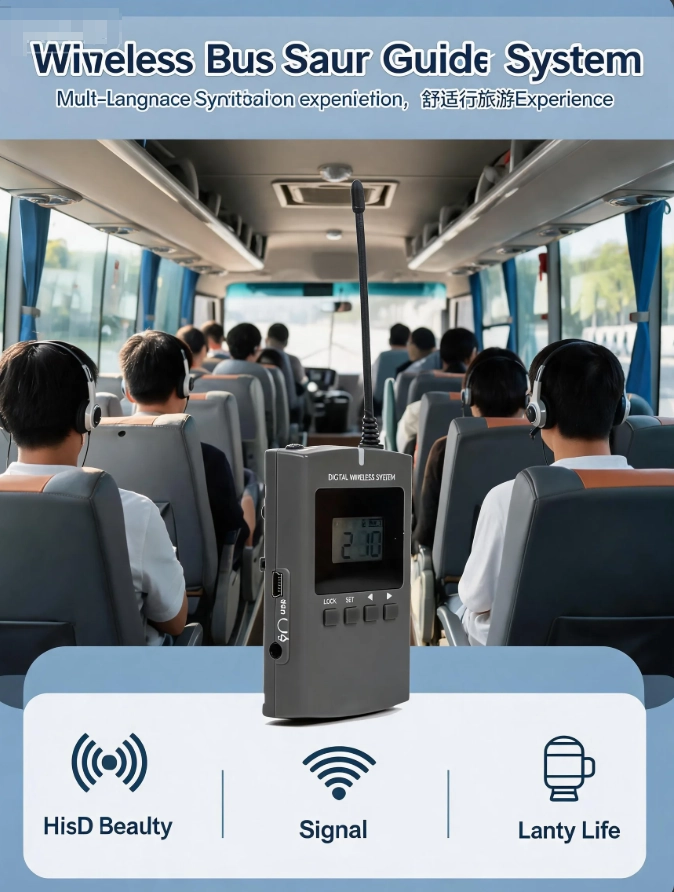
A Bus Tour Guide System is a closed-loop, wireless audio solution designed specifically for group transit. The live tour guide (or an automated audio player) connects to a digital transmitter. Every passenger is provided with a pocket-sized wireless receiver and a pair of earphones.
Instead of broadcasting sound into the open cabin, the commentary is transmitted directly into the ears of the passengers. This simple shift in architecture solves the acoustic nightmares of the bus cabin and unlocks a host of premium operational features.
Core Advantages for Fleet Operators and Travel Agencies
Upgrading to a digital wireless system provides immediate ROI (Return on Investment) through improved reviews, broader demographic appeal, and operational efficiency.
1. Multi-Language Channel Scaling (Fill Every Seat)
The greatest advantage of a digital bus system is channel separation. By utilizing a multi-channel transmitter setup, a single coach can cater to a diverse international group.
- How it works: A live English-speaking guide operates on Channel 1, while a recorded Spanish track plays on Channel 2, and a Mandarin track on Channel 3.
- The Business Impact: You no longer need to dispatch three half-empty buses for different language groups. You can consolidate all demographics onto one fully booked coach, drastically reducing fuel and labor costs.
2. Overcoming Engine and Traffic Noise (ANC Technology)
Open-top sightseeing buses and older diesel coaches generate immense ambient noise. When searching for a system, B2B buyers must prioritize Active Noise Cancellation and Digital Signal Processing in the guide’s microphone.
DSP algorithms filter out the low-frequency hum of the engine and the roar of passing traffic, ensuring that only the guide’s crisp, Hi-Fi voice is transmitted to the passengers. For the listeners, the noise-isolating earphones physically block out cabin chatter, creating an immersive, VIP audio experience.
3. Cross-Border Compliance: The 2.4GHz Global Standard
For long-distance coach operators conducting multi-country European tours (e.g., traveling from Germany through Switzerland to Italy), radio frequency laws are a major legal hurdle.
Traditional UHF systems require specific licenses that change from country to country. Using an illegal frequency can result in heavy fines. By procuring a 2.4GHz Digital Bus Tour Guide System, operators utilize the global ISM band. This frequency is 100% license-free worldwide, allowing your fleet to cross borders seamlessly without any regulatory paperwork or risk of local radio interference.
Comparing Audio Solutions for Different Bus Types
Different fleets have different operational needs. Here is how modern audio systems adapt to specific transit scenarios:
| Fleet Type | Audio Challenge | The Wireless Solution |
| Hop-On Hop-Off (HOHO) | High passenger turnover, open-air wind noise, multi-lingual tourists. | Multi-Channel Receivers with automated GPS-triggered audio feeds and wind-proof microphones. |
| Luxury Long-Distance Coach | Need for quiet cabins; passengers want to sleep or read. | Direct-to-Ear Receivers allowing interested passengers to listen, while others enjoy total silence. |
| VIP / Factory Shuttle | Highly interactive, passengers need to ask questions. | Two-Way (Full-Duplex) Systems allowing executives to press a button and ask the guide questions. |
Essential Hardware Features for Daily Bus Operations
Fleet management is fast-paced. Drivers and guides do not have the time to troubleshoot complex tech or plug in 50 individual charging cables. When selecting a supplier, insist on these enterprise-grade features:
- Drop-and-Charge Storage Cases: Look for heavy-duty, shock-proof transit cases with integrated 32-slot or 60-slot charging docks. At the end of the shift, the guide simply drops the receivers into the slots.
- One-Click Bulk Synchronization: A crucial time-saver. With the push of a single button on the charging case, all 50 receivers are instantly reset, fully charged, and synced to the correct channel for the next morning’s tour.
- Extended Battery Life: A standard sightseeing day can last 8 to 10 hours. Ensure the receivers boast a minimum 15-hour lithium-ion battery life to prevent devices from dying during the final leg of a tour.
- Universal 3.5mm Earphone Jacks: For hygiene purposes, many passengers prefer to use their own personal earbuds. Standard 3.5mm jacks allow them to plug in directly, or operators can distribute low-cost, single-use disposable earphones.
Final Thoughts: Elevating the Passenger Journey
In the era of online reviews, the passenger experience is your most valuable marketing asset. A distorted, echoing PA system leads to disengaged tourists and negative TripAdvisor ratings.
By upgrading your fleet with a dedicated Bus Tour Guide System, you transform a noisy commute into an immersive, personalized journey. You empower your guides to speak naturally, allow multi-lingual passengers to feel included, and create a quiet, luxurious cabin environment. For modern B2B fleet operators, this technology is no longer an optional luxury—it is the baseline for operational excellence.